


Specifications
Standard: DIN 3352-F4, DIN 3352-F5, BS5163, AWWA C509,AWWA C515
Flange drilling is according to DIN2501, BS4504 and ANSI B16.1
Working pressure: 10bar/16bar/25bar
Testing pressure:
Shell: 15bar/24bar/37.5bar
Seal: 11bar/17.6bar/27.5bar
Type: non-rising stem / rising stem
Material:
Body: Ductile iron GGG40/50 or Cast IronGG25
Wedge: Ductile iron GGG40/50+EPDM/NBR or metal seated
Stem: stainless steel 2Cr13 , SS304,SS316
Bolt and Nuts: Carbon Steel with zinc plated or SS304, 316
Coating: Internal and external with fusion bonded epoxy coating min250μm
Type of Gate Valves based on Stem Movement:
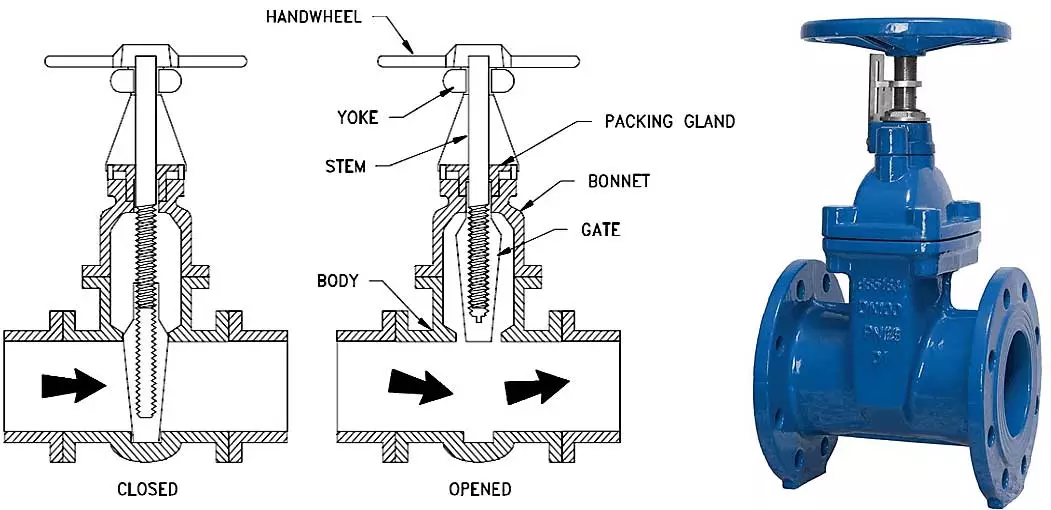
Non-Rising Stem – In this type of valve, there is no upward movement of the stem. The valve disk is threaded internally. The disc travels along the stem like a nut when the stem is rotated. In this type of valve, stem threads are exposed to the flow medium. Therefore, this design is used where space is limited to allow linear stem movement, and the flow medium does not cause erosion, corrosion, or wear and tear to the stem material. This type of valve also known as insider screw valve.
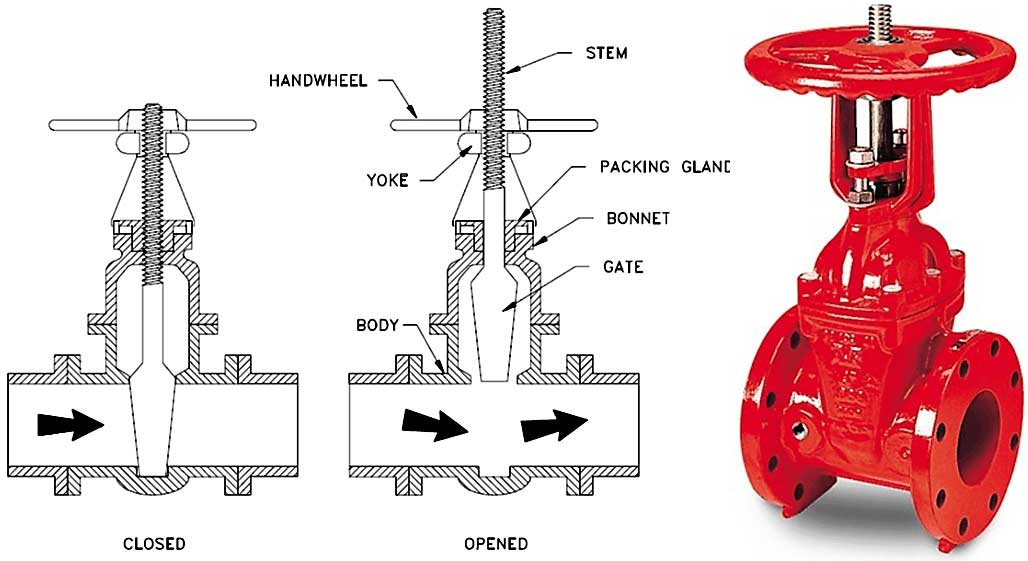
Rising Stem – the stem will go up while opening the valve and move down when you close the valve. In an inside screw design, the threaded portion of the stem is in contact with the flow medium, and when you open the valve, the handwheel rises with the stem.


